Showing posts with label Nonfiction Monday. Show all posts

Monday, April 04, 2011

Nonfiction Monday: Ultimate Guide to Bastketball

Ultimate Guide to Basketball: Facts, STATS, Stars, and Stuff
 In honor of the Final Four which is here in town:

Ultimate Guide to Basketball: Facts, Stats, Stars and Stuff by James Buckley, Jr. Beach Ball Books, 2010 (review copy provided by the publisher)

In the style of Guinness Book of World Records and other "record" books this is a fun, start-anywhere-book of facts and information about basketball.  This is not a book with every conceivable stat and fact but at 160 pages, it does give  nice brief, overviews of the sport.  The focus is on professional basketball, the history of the game and the NBA. Lots of short, interesting (to me) descriptions of court positions and player roles, facts on steals, blocks, and assists are included.
So THAT is what a "pick and roll" is.

Legends of the game, including  Wilt Chamberlin, Bill Russell, Magic Johnson, and some of their stats are detailed.  Information about each NBA division and franchise is also included along with some "funky facts" about each team.  I did not know Mavericks guard Jason Terry wears 5 pairs of socks because it is "more comfortable" when he plays.

Two color printing with insets and fact boxes and balloons make this an accessible and entertaining overview of the game.
The Nonfiction Monday Roundup is at L.L. Owens!

Monday, November 22, 2010

NonFiction Monday: KidsCan Press

Ultimate Trains (Machines of the Future) Dewey  385
Ultimate Trains written by Peter McMahon, illustrated by Andy Mora. KidsCan Press, 2010 (review copy from publisher)

Peter McMahon sees trains as an important part of transportation's future.  Touting them as a greener alternative to airplanes and cars he tracing the history of trains from their horse drawn days, through steam engines, diesel and on to magnetic levitation designs.   The quest for power and speed is reviewed, accompanied by clean-line illustrations and diagrams by Andy Mora.  

Hands-on experiments to illustrate the concepts in the book include, "Steam Engine in a Salad Bowl," "Riding the Rails," "Make your Own Electromagnet," and "Making a Maglev Test Track." There are templates of tracks and trains to photocopy (please, don't cut up the library book.) All the experiments are very do-able  with parental help to acquire wires, copper tubing, nails, batteries and other sundry supplies.  The final project, "Make a Working Maglev Model" requires lumber and Lexan (polycarbonate) which is more challenging. Detailed plans and photos of the projects are available on the KidsCanpress website
This is the first book in  a Machines of the Future series.

Looking Closely in the Rain ForestDewey:  578.734

Looking Closely in the Rain Forest by Frank Serafini.  KidsCan Press, 2010  (review copy from publisher)

Frank Serafini's Looking Closely series includes habitats like the forest, the shore, the desert, the pond, and the garden in addition to the rain forest. 

Animals, flowers, plants, insects and birds are examined in close-up detail. Only part of the photo is exposed on one page as the reader is invited to guess what the page turn will reveal.  Intense red color with a feathery texture is unmasked to be a hibiscus flower.  A few facts about the subject accompany the full page+ photographs.  The vivid photographs are high resolution and close up.  Good white space and a well sized typeface invite all reading levels to learn more about the rain forest. 

Monday, June 14, 2010

Nonfiction Monday: Global Warming

Global Warming 
 Nonfiction Bummer!

As librarians know, children who enjoy nonfiction often identify their choices as "true" books.


Global Warming by Seymour Simon.  HarperCollins, 2010

Seymour Simon's books are beloved.  I can personally attest to the popularity of Lightning, Tornadoes, Sharks and Storms. The bindings of my library copies were loose and the page edges were softened from many turnings. The imprimatur of the Smithsonian Institution now gives his books additional authority.

Alas, I suspect this title has fallen victim to the Pluto Effect.  When Pluto lost its planet status, libraries had to scramble to update their space/planet collections. In the meantime, did the Pluto books get chucked-out?  It was still a dwarf planet. The information in the books was still accurate in many ways.  It was just the conclusion that Pluto was a planet that was the issue.  Was it enough to put up disclaimers until new material could be acquired?

Similarly, late in 2009, when data gathering problems and accusations of data loss, fabrication and manipulation at the  National Climatic Data Center  and  British University of East Anglia Climate Research Unit,  were revealed, seemingly de facto conclusions about the Earth's climate were called into question.  Even the vaunted IPCC had to apologize  for "misrepresenting" Himalayan glacier-melting data.  

The publishing cycle is long.  The folks at HarperCollins could not have foreseen Climategate.

Global warning
Simon addresses the issue of global warming by presenting the concept and outlining the possible causes.  He writes, "In 2007, a report by 2,500 scientists from 130 countries concluded that humans are responsible for much of the current warming."   

I checked the back for a 'works cited' or 'references' but the citation to this "2007 report" was not included.
Which report?
Who issued it?
I assume he is referring to the IPPC's 2007 report that won them a Nobel prize?  This book is an introduction to the subject.  Could he have not at least included the title of the report?
We teach kids to ALWAYS cite a direct reference. To not do that here is bad modeling.

Simon's writing style is always straight forward and engaging.   He explains the terminology well and presents a good overview of different sources of greenhouse gases and summarizes why scientists believe they are affecting the  climate.

Breathtaking photos of adorable polar bear families are featured inside the book and on the cover.  These animals have certainly become the poster child-animal for all global warming books.   They must have a deal with the WWF that no book on this subject can be published without their faces on the cover. 

The use of photographs is a Seymour Simon trademark.  In this title the photos are used to illustrate "concepts" of flooding, drought, air pollution etc. but slip towards reportage of Simon's speculations.

Simon repeats the much disputed claim that should the Antarctic ice cap melt, sea levels would rise 20 feet.  Although he qualifies it with "...it does not look as if the entire ice cap will melt any time soon..." the statement is illustrated with a photo of people, caught unaware, struggling through dangerous flood waters.  The photo, covering 2/3 of the page,  gives the impression that the flooding from rising sea levels could happen at any moment instead of over a millennia.

The rooftops of homes and red barns barely show above the flood waters  on page 18. The image is more reminiscent of  river flooding in Nashville or the Midwest than the coastal flooding it is supposed to be illustrating.  There are no captions so the reader has no idea where the photo was taken or what caused this flood.  If the goal is an emotional punch, the pictures work, but as photographic evidence of rising sea levels, I think not.

His juxtaposition of two photos of the Grinnell and Salamander Glaciers from 1957 and from 2004 is well done and depicts the retreat of the glaciers. The camera angle appears to be the same. 

He discusses  the threat to coral reefs caused by the El Niño weather pattern and even shares a frightening photo of a dead reef, bleached white.   Is the El Niño/El Niña pattern unnatural and the direct result of  global warming?   Did global warming cause the demise of this particular coral reef? This seems to be the implication.  Is this true?

Simon  admits the Earth's climate is "very complex, and many factors play important roles in determining how the climate changes." (p. 9)  He goes on to list some of the "natural variations" that could play a role.  Unfortunately, none of the "natural variations" are worthy of a photo apparently.  
A picture is worth, how many words?  
 Is it honest to show an industrial smokestack emitting--well, what is that exactly? Particulate? Or is it steam? (no captions) and NOT show the "natural" Mount Pinatubo eruption?


On page 27, Simon concedes, "Our planet may be going through a natural cycle of getting warmer" and acknowledges that there is a debate about what humans can do about it. Readers, without prior knowledge, will not gain any insight into the nature of the debate though.   The photos of cars, industry and city smog suggest the only explanation could be man-made global warming.  His earlier statement that "most scientists agree that something different is happening now."(p. 9) seems to imply the absence of debate which is  disingenuous as  large portions of the scientific community do  NOT agree that global warming is caused by humans. 

He lists the often-repeated things people can do to use less energy.  A photo of a wind turbine and a solar panel illustrate some alternative ways of energy production.   He does not share the environmental hazards posed by the fluorescent light bulbs he suggests nor the potential health risks from living near wind turbines.  The heavy burden on family budgets and nations' economies that higher energy costs will cause are also not addressed.

  • The climate needs to be studied. 
  • Data needs to be gathered. 
  • Scientists need to work, honestly to understand climate pattens and changes.  
  • Children benefit from an introduction to these issues but they deserve a balanced, not sensationalized presentation on  the subject.
    They want a "true" book.

    To sum up:
  1. Good on ya-s for including a good glossary and an index, along with a list of "Read More About It" websites, and for showcasing the case for man-made global warming.  The Seymour Simon book style photos are beautiful and high quality and sourced at the front of the book.

  2. Bummers for NO captions, NO list of of sources, and for photos with NO context, as well as questionable and manipulative photo choices and positioning. Bummers for dashing my hopes that the Smithsonian imprimatur would deliver an even-handed, kid friendly look at this issue. 
Simon's books have a long shelf life.  Hopefully, the next edition will  better documented and reflect new research.  I know page real estate is precious in a child's nonfiction but they should have squeezed in a list of sources for their speculations.  I hope they did more research than just watch one  movie.

That would be...inconvenient.

Monday, April 26, 2010

Nonfiction Monday: Origami Toys that Tumble, Fly and Spin

Origami Toys: Paper Toys That Fly, Tumble, and Spin

Origami Toys that Tumble, Fly and Spin

by Paul Jackson,  Gibbs Smith, 2010  --  Dewey:  736

The ONE art supply that school kids always have at hand is paper. Origami books are continually in demand in school libraries, Books that focus on paper airplane folding are especially popular.  Jackson has gone beyond airplanes in this book and focuses on other "action" forms. Dogs, birds, beaks, frogs, fish, and crocodiles bark, snap, and flap.  Jackson's directions are clear and easy to interpret.  He defines the complexity of the models by "simple," "intermediate," and "advanced."  It occurs to me that the catapult on page 115 could have many uses to bored and imaginative students. He does not neglect aeronauts and does include some flying models as well.
Many of these models would work well in a storytelling setting too.

A packet of origami paper is included.  The book is a worthwhile addition to any origami collection, I recommend it for paper folders of all ages.

Monday, March 16, 2009

NonFiction Monday: Cookbooks


Dewey: 641.5


My experiences as a school librarian have taught me the importance of having kid friendly cookbooks in a library's collection.

These cookbooks are not geared towards a very young chef but they are engaging to peruse and with some adult support in the kitchen, they would be fun to use and would produce some yummy food.


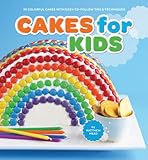
Cakes for Kids: 35 Colorful Recipes with Easy-to-Follow Tips & Techniques by Matthew Mead, Chronicle Books, 2008

I absolutely love fancy decorated cakes, birthday or otherwise. This cookbook offers basic cake recipes for chocolate, yellow and marble cake. There are also recipes for royal icing, icing glaze, creamy white icing and Seven Minute icing. Personally, I cannot make seven minute icing without adult supervision but otherwise, the instructions are kid friendly and easy to follow.

Choosing which cake to build is the challenge. There is a pirate's treasure chest, an Easter Egg, a royal crown, a rainbow, a robot, a giraffe, a castle with ice cream cone turrets, a ghost cake with soft peaks of seven minute icing ghosts festooning the layers. Clown face cupcakes, ladybug cupcakes, a moose cake made up of cupcakes...hmmmm...

Cereal, candy and cookies are used to embellish to great effect. OK, seriously, I want to go mix up some icing and lick the beaters now.


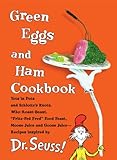
Green Eggs and Ham Cookbook: recipes inspired by Dr. Seuss concocted by Georgeanne Brennan and photographed by Frankie Frankeny, Random House, 2006

A quote from a Dr. Seuss book introduces each recipe. These are serious recipes for real-we-can-eat-that-for-dinner meals. The recipes are framed with characters from various Dr.Seuss books such as Cat's Mac and Cheese (made with ricotta and Parmesan cheese) and the Grinch serving Who-Roast-Beast which is a recipe for roast chicken.

Not all the recipes require a stove or oven but most of them do. A great deal of the cooking would require an adult to oversee the process. Hoop-Soup-Snoop Group Potato Soup calls for peeling and boiling potatoes, chopping an onion, crisply cooking bacon and grating cheese (hmm, that sounds good) which means an adult needs to be on hand but in a time when I'm trying to shop on the perimeter of my grocery store where the whole foods are, it is not a bad thing for kids to realize that soup does not have to arrive in the bowl from a can

The nice spiral binding allows the book to lie flat for frequent consultation and the theme should engage kids.

Nonfiction Monday round-up is over at L. L. Owens!

Sunday, March 08, 2009

NonFiction Monday: Be Water, My Friend


Dewey: B LEE


Be Water, My FriendBe Water, My Friend: the early years of Bruce Lee by Ken Mochizuki, illustrated by Dom Lee, Lee&Low, 2006

Ken Mochizuki and Dom Lee have teamed once again, this time, to tell the childhood story of martial arts master, Bruce Lee. In the author's note, Mochizuki acknowledges that parts, his story were "extentions of the facts, based on the author's knowledge of the times and circumstances of Lee's life." Because he makes this clear, I feel more comfortable with the "recreated" dialog and storyline presented.

The known facts from his appearances in movies as a child and his early training in martial arts are included. The book ends with Bruce sailing for the USA to avoid further entanglements with gangs and his own propensity for fighting.

The rest of his story is told in an after word. His struggles in the American film industry and his success in the Hong Kong movie business are chronicled as is his untimely death at the age of 32.
The author also notes that the title of the book is a quote from Lee, himself.

Dom Lee's distinctive sepia tone paintings evoke instant authenticity in every book he illustrates. He uses encaustic beeswax painting to achieve this effect. His style advances the story with panels to convey action sequences and more reflective single pictures that extend beyond the confines of one page. His research into period clothing and settings is astonishing. Truly, his paintings allow readers a look back in time.

Monday, February 23, 2009

NonFiction Monday: Are You Afraid Yet?


Dewey: 001.994


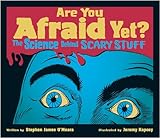
Are You Afraid Yet?: The Science behind Scary Stuff written by Stephen James O'Meara, illustrated by Jeremy Kaposy, Kids Can Press, 2008


I have to issue a disclaimer right off the bat, I do not really do "horror-scary" stories very often. I'm not opposed to them, I just don't enjoy them. I have never read a Stephen King novel. I do know that the number one most frequently searched term in my school library OPAC was "scary." So, anticipating how much this book might thrill young readers I eagerly opened it.


Then I shrieked!


Yes, this book made me scream.


The author's introduction to the physiology of fear, "Have a SAFE Fright" was reassuring, almost comforting knowing my amygdala was on alert! I looked through the parts on mummies, UFOs, vampires, and mad scientists with interest. Then I read "Keeping you Head" concerning the guillotine, followed by "The Staring Eyes" and I shrieked, screamed, hollered, dropped the book and shuddered.


Good job, Stephen James O'Meara. Mission accomplished.


O'Meara entwines stories from history along with scientific "Freaky Facts" which leave the reader to ponder the nature of skeletons, oxygen deprivation, werewolves and maggots.


Jeremy Kaposy's artwork evokes the old Marvel Comics Strange Tales. Although, the black and white drawings offer some distance from some of the grisley subjects, that image of "the staring eyes" which is also the cover art, has [shivers] stayed with me.

Monday, January 26, 2009

NonFiction Monday: Extreme Animals


Dewey: 590


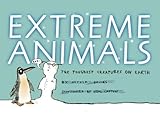
Extreme animals: the toughest creatures on Earth by Nicola Davies, illustrated by Neal Layton, 2006

Extreme makeovers, extreme sports, extreme heat, extreme music: the word extreme conjures up images of rocketing skateboarders or freerunning athletes. Nicola Davies shares a sense of wonder and fascination with the living organisms that thrive and survive in seemingly inhospitable environments, dubbing them, extreme animals.

Tiny bacteria, camels, penguins, frogs and polar bears are just some of the living things that make a who's who list of these animals. Davies describes "how" they do it. She details the penguin's internal heating system and illustrator, Neal Layton, provides a drawing of how it works. Reptiles store water, camels have an internal brain cooler. Star fish and sponges can survive being cut apart. Extreme temperatures and extreme ocean depth would crush some creatures but others have adapted to these environments.

Neal Layton's drawings and cartoons illustrate and clarify the subject. His irreverent humor underscores the information. According to Davies, a sponge can be whirled in a blender and reassemble itself. Layton shows us a scientist quaffing a drink from the blender while a horrified co-worker murmers, "That's not a smoothie."

Other cartoon character offer commentary as a polar bear holds a sign, "Live Naked" or a camel gasps "hot" or "cold" as the day/night cycle. Even the index and glossary are embellished with small drawings which clarify and illustrate ideas and terms. The hardy tardigrade holds a sign, "Tardigrades Rule OK!"

If you've ever wondered why polar bears and penguins don't turn into popsicles, this book is for you.
I found it utterly irresistible!

Sunday, July 27, 2008

NonFiction Monday: Texas Rangers


Dewey: 976.4


Texas Rangers: Legendary Lawmen
by Michael P. Spradlin, illustrations by Roxie Munro. Walker & Co., 2008

Here in the Lone Star State, the social studies curriculum calls for teaching Texas history in fourth grade and seventh grade. I have spent many an hour in the exhibits at TLA searching out related nonfiction. For the most part there are a "specialty" publishers who feature biographies of heroes of Texas independence, governors, and journalists.

O
ften these books are "one size fits all" attempts that they hope to sell to junior high and elementary schools. Many of the titles are written on a grade 6 reading level, splitting the difference between fourth and seventh grade? This is not helpful to elementary school librarians.

When I saw Michael Spradlin's profile on JacketFlap, I noted this new book and sought it out at the TLA library conference this past spring.


Spradlin's story of the Texas Rangers progresses chronologically, from their origins as Texas "Minute Men," through the days of the Republic to the oil boom of the early 20th century through today. I did not know that the Texas state legislature mandates the number of Rangers serving, there are only about 120 at any given time. A single vacancy can attract over 100 applicants.

Much of the history of the Rangers is founded in the personalities who wore the badge. John B. Armstrong, Lone Wolf Gonzaullas, Frank Hamer were responsible for the capture of some of the most notorious outlaws in American history, including John Wesley Hardin and Bonnie and Clyde.

The picture book aspect might discourage junior high librarians from adding this title to their collections. Do not make that mistake.
Spradlin's writing is concise but not simplistic.

Roxie Munro's clear, bright illustrations depict the daring-do of the Rangers. Her distinctive style commemorates the landscape and the personalities who shaped the state.

Many libraries here own her Inside-Outside Texas, 2001.
I have to believe Spradlin must have done a happy dance when he heard she was to be his illustrator. The layout and even the typeface evoke the history that shapes the Texas outlook today.

I would urge publishers to follow suit with more lovely, full color Texas nonfiction. I am thankful to Spradlin and Munro for this gift.

I believe they will sell a copy to every library in Texas. As iconic as the Texas Rangers are, there is a place for the title in American history collections across the country.

Now, will someone, please, offer a similar treatment for Stephen F. Austin a.k.a. "the father of Texas?"


Michael P. Spradlin website
Roxie Munro website


Monday, April 07, 2008

NonFiction Monday: Sabertooth


Dewey: 565.79


Sabertooth
by Patrick O'Brien, Henry Holt, 2008

Patrick O'Brien thinks BIG!
Whether it is The Great Ships, The Hindenburg, Megatooth, Mammoth or his book Gigantic! : how big were the dinosaurs?, O'Brien brings larger than life history to young readers.

This book explores the background of the sabertooth cat as well as other ancient "sabertooth" mammals. O'Brien illustrates the actual-size of a Smilodon canine tooth and compares it to an actual-size tiger tooth from today. His paintings evoke the fur and coloration of the cats as he speculates on their possible colors and patterns. A cat's unsuccessful struggle to escape a tar pit provides scientists today with the bones and fossils that teach us about this animal, its prey and enemies.

O'Brien brings prehistory to life in his paintings. The watercolor gives a softness to the landscapes but he also paints the skeleton and skulls of Smilodon and other cats, with precision.

This is a must-have for a school library.

Monday, March 17, 2008

NonFiction Monday: The Worst-Case Scenario


The Worst Case Scenario Survival Handbook (Junior Edition)Dewey: 646.7/00835


The Worst-Case Scenario Survival Handbook: Junior Edition by David Borgenicht and Robin Epstein, illustrated by Chuck Gonzales, Chronicle Books, 2007

One of the things that delighted me at the International Spy Museum gift store, last summer, was the interesting and humorous selection of books for sale. I was tickled to see the entire line of Worst-Case Scenario books there. These books offer a combination of practical and MacGyver-esque advice. There is also the entertaining speculation of "what would I do if attacked by an alligator or trapped in quicksand?"

The Junior Edition focuses its advice for youngsters on the survival skills needed at home, school, socially and outdoors. Looking through the book as an adult, you feel the empathy Borgenicht and Epstein have for kids making their way through the minefield that is childhood.

There are the practical suggestions that are parent pleasing, "How to Make your Room Shipshape" and "How to Survive Outdoor Chores." Other chapters satisfy the gross-out factor, "How to Survive Poo on your Shoe" and "How to Survive Farting in Public." Other sections offer support with situations that truly concern kids, such as bullies, having to eat lunch alone, and being the new kid.

Tips for surviving parent anger are dished out with humor,

Telltale Signs you've got an annoyed adult on your hands

Steam is pouring out of his nose or ears.

Her arms are crossed and her foot is tapping but there's no music playing in the background. ...

She keeps pounding the kitchen table with her shoe...

The book design by Lynne Yeamans is easy on young eyes with reader friendly typeface and lots of white space. Chuck Gonzales's illustrations are comical yet accurate. This is a book that kids will pick up and read. They will recognize the situations outlined in the book which are presented with humor and sympathy.