Showing posts with label scary stories. Show all posts

Sunday, October 16, 2011

Walking Home in the Dark...

Ever since Ichabod Crane was chased by the Headless Horseman, the real and imagined threats that lurk in the darkest shadows have been celebrated in urban legends, novels and picture books.

Bone Dog by Eric Rohmann. Roaring Book, 2011

Gus loves his dog, Ella, but she is getting old and she warns him that she will not be around much longer.  Before she dies she promises Gus that she will always be with him.  Gus is sad and missing his dog as Halloween arrives but he puts on his skeleton costume and goes out trick or treating anyway. On his way home through a graveyard (of course!) he is surrounded by threatening skeletons. Just as they are about to attack, Ella appears as a bone dog to save him. The skeletons are unimpressed until Gus and Ella begin to howl into the night, calling real live dogs to their aid. The final pages confirm and assure the young reader that love never dies and Gus will never be alone.

Rohamann's visual storytelling is cinematic here. He opens and closes the story, viewing Gus and Ella together before an iconic full moon that frames the two friends. The reader (and Ella?) watch from above as Gus sits alone, rakes leaves alone and heads out for trick-or-treating, alone. Once Ella, the bone dog, returns to the scene, the view returns to ground level. The skeletons are at once comic and scary. Rohmann pans their frenzied retreat across a two page spread as they flee from ... turn the page ... the pack of real dogs in pursuit.  The next page turn will be a laugh-out-loud read aloud moment.  This is a beautiful story told with humor, sweetness and delicious creepy moments. I predict this book will not linger for long on the library's return book cart.   I cannot WAIT to share it with children.


On a Windy Night by Nancy Raines Day; illustrated by George Bates. Abrams, 2010

Outstanding read aloud story about a scary walk home on Halloween night.  A young boy's imagination turns shadows, sounds and dark shapes into terrifying threats until the moon light reveals what they really are. This is a perfect Halloween story that acknowledges the thrilling spookiness of the night but reassures too.  Nancy Raines Day heightens the boy's imagination with a classic chant of  "Cracklety-clack, bones in a sack. They could be yours--if you look back."  The words grow in size, across the pages, as the boy's fear grows.  Bates's pen and ink drawings depict the eerie clouds, the threatening tree branches and menacing cornstalks that become skeletons and jack-o-lanterns chasing the child on his way.  The pen and ink work gives a splendid childlike Edward Gorey-ness to the pictures. 


Dark Night by Dorothee de Monfreid. Random House, 2009

As Felix walks through the dark woods, the scary growl from a wolf sends him into hiding.  Another loud growl from a tiger scares away the wolf who is then frightened away by a crocodile. Along with n unlikely small friend and a clever idea Felix turns the tables on the beasts with a bigger "badder" creature of his own invention. Sometimes the first step in overcoming fear is to find a friend and just walk tall.
Thursday, October 29, 2009

The Curse of the Campfire Weenies


The Curse of the Campfire Weenies: And Other Warped and Creepy Tales by David Lubar, Audiobook read by Paul Michael Garcia, Blackstone Audio, 2009 (review copy source: public library audiobook download)


Dear David Lubar,
I confess that I've seen references to books that you have written and I have had the general impression that you were an author whose work I would enjoy. Alas, I never got around to picking up one of your books.

As I listened to story after story in this collection, I realized that I had no idea, not one, zip, zero to the negative 39th power that this splendid, enthralling, original, perfectly paced and balanced assemblage of creepy, odd, and perfectly, wonderfully, strange stories existed.

All these years, all those OPAC searches watching kids type in the keyword "scary" and I could have been handing kids THESE books.

This book includes stories that will make the reader laugh, snort, shiver, gasp, gulp and start with surprise. There are several I've already marked for read-alouds. "The Unforgiving Tree" about a tree with a grudge, has to be one of my favorites so far. Reluctant readers would fight over this book. I can only imagine what the other books in the Weenie series are like.

I stand abashed and humbled. I will, however, now strive to make amends. I cannot think of a better book to celebrate Halloween or to share at the next camp out or sleepover.

Monday, February 23, 2009

NonFiction Monday: Are You Afraid Yet?


Dewey: 001.994


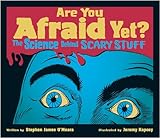
Are You Afraid Yet?: The Science behind Scary Stuff written by Stephen James O'Meara, illustrated by Jeremy Kaposy, Kids Can Press, 2008


I have to issue a disclaimer right off the bat, I do not really do "horror-scary" stories very often. I'm not opposed to them, I just don't enjoy them. I have never read a Stephen King novel. I do know that the number one most frequently searched term in my school library OPAC was "scary." So, anticipating how much this book might thrill young readers I eagerly opened it.


Then I shrieked!


Yes, this book made me scream.


The author's introduction to the physiology of fear, "Have a SAFE Fright" was reassuring, almost comforting knowing my amygdala was on alert! I looked through the parts on mummies, UFOs, vampires, and mad scientists with interest. Then I read "Keeping you Head" concerning the guillotine, followed by "The Staring Eyes" and I shrieked, screamed, hollered, dropped the book and shuddered.


Good job, Stephen James O'Meara. Mission accomplished.


O'Meara entwines stories from history along with scientific "Freaky Facts" which leave the reader to ponder the nature of skeletons, oxygen deprivation, werewolves and maggots.


Jeremy Kaposy's artwork evokes the old Marvel Comics Strange Tales. Although, the black and white drawings offer some distance from some of the grisley subjects, that image of "the staring eyes" which is also the cover art, has [shivers] stayed with me.

Thursday, October 16, 2008

Hell Phone

I had an opportunity to visit with one of my former students recently. As their "librarian-for-life," I am always interested in their current reading choices and interests. He said, "You have to read William Sleator, Mrs. P."

My sojourns into middle school libraries have reinforced my belief that is is NEVER too late for a kid to become a reader.


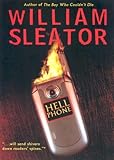
Hell Phone by William Sleator, Harry N. Abrams, 2006

Start with some classic Rod Serling-Twilight Zone; add in some of Dante's Divine Comedy with extra "Inferno" sprinkled on top. Mix in cell phones, video games, part time jobs, and a high school romance and you have a book that grabs the most reluctant, uninterested, I-don't-read-books guy (or girl) and keeps them turning the pages.


The road to hell is paved with good intentions.
[1855 H. G. Bohn Hand-Book of Proverbs 514]


Nick is an "A" student works a part-time job at a hospital. His income helps his mother who is working two jobs to support them. He does not have a car but gets around on an old bike.
For the first time in his life, Nick has a girlfriend and he is crazy about her. He is respectful to her parents and mindful of her commitment to the high school soccer team. He just wants to be able to talk to her on the phone in the evening.

A flier advertising the "cheapest phones in town" lures him to a store in a seedy neighborhood to look for a cell phone The fact that the caller ID does not work, does not dissuade him from buying the phone that is offered to him. The whiff of sulfur about the cell phone store foreshadows the events to come.

He begins to receive terrifying calls the moment he turns the phone on. A sobbing young woman and dire warnings from the former owner of the phone frighten him. When an anonymous, sinister voice threatens him, Nick's life begins to spin out of control.

He begins lying, stealing and becomes enmeshed with unsavory characters. The reader can sense the downward spiral Nick is on and calls to him at every turn to stop and reverse his course. The cell phone takes on a life of its own and plays on his insecurities. Nick acts heroically to rescue his girlfriend from an attempted rape (before anything happens) but then commits a crime for which he is tried and punished.

The book has great appeal to middle school boys. Seventh and eighth grade guys are looking towards high school when they will be have a part time job, working for good grades to earn college scholarships, and dating for the first time. Books are a safe way for kids to "try on" a future.

In every way, Hell Phone is a cautionary tale. The ease in which Nick slips away from his former life is frightening as each decision seems to be made almost innocently or as an attempt to protect his girlfriend and mother.

Sleator allows for redemption but harsh lessons are learned and no one escapes scot-free. The situations are grim and the book is creepy but there is no vulgar language or "Sam Peckinpaugh" style violence. The filth and ordure of Hell is vividly described and provides a hefty, "eeewww..." factor.

What a great teen book club read this would be!
There is much to ponder and discuss here about right and wrong, religious implications, free will and the nature of evil.

The book design is by the imaginative Chad Beckerman. (who also designs The Last Apprentice series) This cover grabs the reader by the shoulders and dares them to move on to another book. The opening pages shows a cell phone signal strength icon with the final and tallest bar in flames. Flames edge the pages exactly where a reader holds the book to read.

No wonder the book hardly ever makes it back to the shelf before it is checked-out again.

Wednesday, February 21, 2007

Ghost Fever/Mal de Fantasma


Ghost Fever/Mal de Fantasma
by Joe Hayes, 2004

Ghost Fever won the Texas Bluebonnet Award for 2007, joining previous Bluebonnet ghost stories winners. including The Ghost of Fossil Glen in 2000, Time For Andrew: A Ghost Story in 1996, Wait 'Til Helen Comes in 1989 and Christina's Ghost in 1988.

Joe Hayes is a professional storyteller known for his Southwestern stories. This 87 page book is the kind of chapter book I love because young readers, still gaining fluency, can move through the story quickly and feel successful that they have mastered "a chapter book." It certainly qualifies as the kind of "scary" book young readers seek.

Cole Cash rents houses in Duston, Arizona on the wrong side of the tracks. No matter what he does though, he cannot rent one abandoned house to anyone. In desperation he offers 6 months free rent to whoever will sign a one year lease. Rumors of ghosts keep the house empty until Elena’s father hears about it. Newly unemployed with two young daughters, Frank Padilla decides to move his family in despite warnings and advice from family and friends. Luckily, Abuelita knows a thing or two about the spirit world so she takes fourteen year old Elena aside to warn her about ghosts.

She instructs Elena on how to talk to a spirit and warns her that she may be the only one who can hear or see it. Mona Pennypacker did the soft pencil illustrations which nicely evoke the apparition on pages 43 and the very creepy on page 63. I know these 2 pictures elicited the “oooooohs” when I introduced the Bluebonnet list last fall.

I look forward to hearing Hayes speak at the TLA Convention in April.