Showing posts with label trains. Show all posts

Saturday, March 10, 2012

On the Blue Comet

On the Blue Comet by Rosemary Wells.  Candlewick, 2010.

On the Blue Comet was a pure joy to read.  My childhood memory of pressing my cheek against the train board to gain a eye/ground level view of the trains was echoed in this story.   The story's main character, eleven year old, Oscar Ogilvie is a kindred spirit as he performs the same ritual. We both were trying to imagine ourselves into the small world of the trains.

When I was a child, we had a model train set up.  We did not have a basement but my father designed a over-sized folding platform for our HO model trains which included a train we had actually ridden on, the Santa Fe Railway Super Chief.

Wells sets her story during Great Depression. Oscar and his father share a love of model trains and they have an elaborate set up in the basement of their house.  Each year they add to their collection but the hard economic times have put a stop to that.  In fact, things are so bad that they must sell the train set to the local bank manager who uses the trains as a display in the bank lobby.  Oscar's father leaves to look for work in California, promising to send for Oscar when he finds some.  The kindly night watchman at the bank allows Oscar to visit and run the trains after the bank closes.  One night the lobby is invaded by bank robbers and Oscar escapes into time and an unlikely landscape.

This story mixes history, time travel, and fantasy along with cameo appearances by some famous people in history.  A great deal of the reading fun was identifying the people Oscar comes in contact with. 

Bagram Ibatoulline has contributed glowing paintings that have been meticulously researched.  Period fashion and architecture are reflected in illustrations which allow the reader to reach back in time too.

The book reminds me of how much model trains added to our childhoods. We learned -- hands-on --about electricity, direct current, transformers as well as trouble-shooting, patience and craftsmanship. 

Monday, November 22, 2010

NonFiction Monday: KidsCan Press

Ultimate Trains (Machines of the Future) Dewey  385
Ultimate Trains written by Peter McMahon, illustrated by Andy Mora. KidsCan Press, 2010 (review copy from publisher)

Peter McMahon sees trains as an important part of transportation's future.  Touting them as a greener alternative to airplanes and cars he tracing the history of trains from their horse drawn days, through steam engines, diesel and on to magnetic levitation designs.   The quest for power and speed is reviewed, accompanied by clean-line illustrations and diagrams by Andy Mora.  

Hands-on experiments to illustrate the concepts in the book include, "Steam Engine in a Salad Bowl," "Riding the Rails," "Make your Own Electromagnet," and "Making a Maglev Test Track." There are templates of tracks and trains to photocopy (please, don't cut up the library book.) All the experiments are very do-able  with parental help to acquire wires, copper tubing, nails, batteries and other sundry supplies.  The final project, "Make a Working Maglev Model" requires lumber and Lexan (polycarbonate) which is more challenging. Detailed plans and photos of the projects are available on the KidsCanpress website. 
This is the first book in  a Machines of the Future series.

Looking Closely in the Rain ForestDewey:  578.734

Looking Closely in the Rain Forest by Frank Serafini.  KidsCan Press, 2010  (review copy from publisher)

Frank Serafini's Looking Closely series includes habitats like the forest, the shore, the desert, the pond, and the garden in addition to the rain forest. 

Animals, flowers, plants, insects and birds are examined in close-up detail. Only part of the photo is exposed on one page as the reader is invited to guess what the page turn will reveal.  Intense red color with a feathery texture is unmasked to be a hibiscus flower.  A few facts about the subject accompany the full page+ photographs.  The vivid photographs are high resolution and close up.  Good white space and a well sized typeface invite all reading levels to learn more about the rain forest. 

Sunday, July 20, 2008

NonFiction Monday: Old Penn Station


Dewey: 385.3


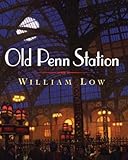
Old Penn Station
by William Low, Henry Holt 2007

In the forward,
William Low decries the passing of Penn Station in New York City when landmarks like Grand Central Terminal have undergone a rebirth and are thriving. While working on his masters he took the opportunity to research and paint the story of the Pennsylvania Railroad's "palace" that would become Pennsylvania Station. The station thrived until after WWII. Then the decision was made to tear down the building. Low documents the destruction as statues are hoisted away and the rubble is dumped in the the New Jersey Meadowlands.

He takes us under the Hudson river as workers tunnel in the yellow glow of lamps. Sunlight streams through the arched glass while the metal gridwork shadows the passengers as they hurry for their trains. Within the book's height of only 32 cm., he pulls the reader into the magnificent space as porters carry luggage, passengers dine in a fine restaurant by candlelight or get a haircut. From different perspectives, we sense the soaring ceiling and the spacious but crowed concourse. Then, having experienced the space and the beauty, we feel the frustration and sadness as the station is torn down around us.

Hear and see William Low describe the project.
This book is a tribute to a building and the people who built it and a lament for an opportunity, lost.